
Pain in the Ball of Your Foot: Is It a Neuroma or Something Else?
6 minute read · Written by Phil McComiskey, HCPC CH34450
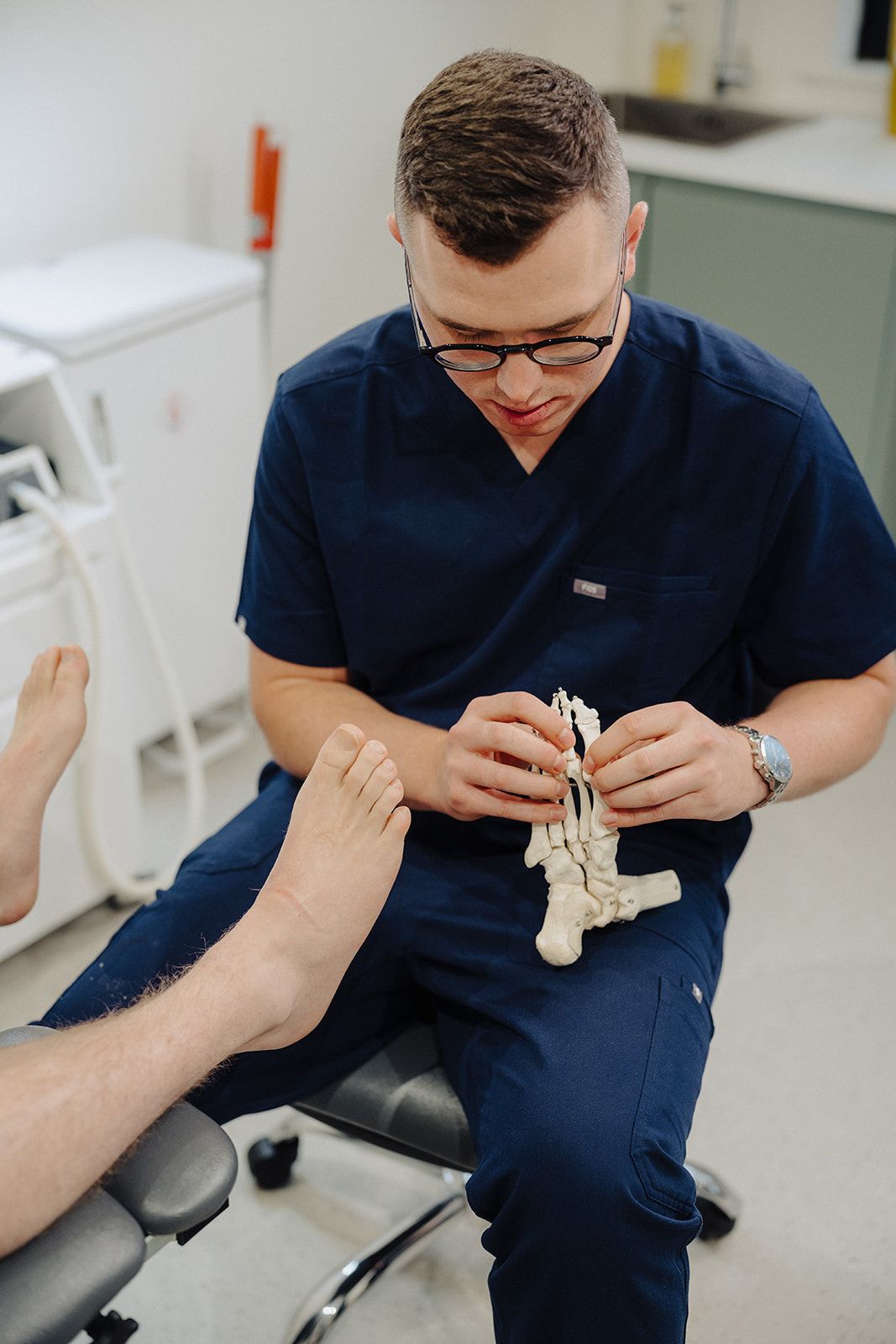
Pain in the ball of the foot is one of the most common things we see, and Morton's neuroma is one of the most common things patients arrive already convinced they have. Sometimes they are right. Often they are not, and the distinction matters because these problems are treated very differently.
What a neuroma actually feels like
A Morton's neuroma is a thickening of the tissue around one of the nerves running between the long bones of your foot. Because the problem is a nerve, the symptoms are nerve symptoms. Burning, shooting or electric pain between the toes. Numbness or pins and needles further out. A sensation of standing on a pebble or a folded sock. Relief when you take the shoe off and rub the foot.
If your forefoot pain is a dull ache that is worse the longer you stand, with no numbness and no shooting element, a neuroma is less likely than you might think.
The problems that mimic it
Metatarsalgia is a general term for pain under the ball of the foot caused by overload rather than nerve irritation. It tends to ache rather than burn, and it is usually tender directly under the bone rather than between the bones.
A plantar plate injury affects the ligament under one of the toe joints, most often the second. It causes pain under that joint, sometimes swelling, and over time the toe can begin to lift or drift. This one is important, because it is regularly mistaken for a neuroma and the treatment is quite different.
A stress fracture in one of the metatarsals causes pain that builds with activity and is tender when you press along the bone. It often follows a jump in training or a change in surface.
Capsulitis or bursitis, meaning inflammation around a toe joint or in the space between the metatarsal heads, can produce very similar symptoms to a neuroma and sometimes exists alongside one.
Where scans fit in
An ultrasound scan can show nerve thickening clearly, and it is a genuinely useful test when the diagnosis needs confirming or when a decision about injection or surgery is being made. If we think a scan would change what we do next, we will arrange one or refer you for one.
What a scan cannot do on its own is tell you which of these problems is causing your pain, because more than one can be present at the same time, and thickening is sometimes found in feet that are not sore. That is why the scan is read alongside the examination rather than instead of it. Between the history, the hands on tests and your loading data, we can usually be confident before any imaging is involved.
How we tell them apart
A proper forefoot assessment takes time, which is why ours is £120 for 60 minutes. We take a detailed history of what the pain feels like, where exactly it is and what changes it. We examine the foot by hand, including compression tests that reproduce nerve symptoms when a neuroma is present. We check the toe joints individually, because a plantar plate problem behaves differently under the finger than a nerve does.
Then we measure how you load the foot, using video gait analysis and Footscan pressure plate analysis, because forefoot pain almost always has a loading component behind it. Two people with identical symptoms can need different treatment depending on where their pressure is going.
Why the diagnosis changes the treatment
A neuroma responds to opening up the space the nerve runs through, which means a wider toe box, a lower heel and often a metatarsal dome to spread the metatarsal heads apart.
A plantar plate injury needs the opposite emphasis. It needs the toe stabilised and protected while the ligament heals, and getting this wrong can allow a toe deformity to progress.
A stress fracture needs load removed altogether for a period, and no amount of padding will substitute for that.
This is why the label matters. Treating the wrong thing wastes months, and in the case of a plantar plate injury it can leave you with a problem that is harder to fix.
Want yours looked at?
A Foot, Heel and Lower Limb Pain Assessment at Assure Health is £120 for 60 minutes, and includes a hands on forefoot examination alongside video gait analysis and Footscan pressure plate analysis.
Book an AssessmentClinically reviewed by Phil McComiskey, Clinical Director and Podiatrist, HCPC CH34450. Last reviewed September 2026.
Ready to move better?
Book online in under a minute. Same week appointments available.