
Why Fungal Nail Treatments From the Chemist So Often Fail
6 minute read · Written by Phil McComiskey, HCPC CH34450
Almost everyone who comes to us about a fungal nail has already tried something. Usually a paint from the chemist, often for months, sometimes for more than a year. They arrive assuming the treatment did not work. In most cases the treatment was fine. It simply never reached the infection.
Where the infection actually sits
A fungal nail infection does not live on the surface of the nail. It sits underneath it, in and around the nail bed, and works its way up through the nail plate as it grows. That is why the discolouration usually starts at the tip or the side and creeps back towards the base.
Antifungal paints are applied to the top of the nail and have to travel down through it. A healthy nail is already a reasonably good barrier. A thickened, crumbling fungal nail is a very good one. The thicker the nail, the less chance anything applied to the surface has of arriving where it is needed in a useful concentration.
Why filing at home is not enough
Most paints come with a small emery board, and the instructions tell you to file the nail before applying. This is the right idea. The problem is scale.
An emery board takes off a little of the surface. What is often needed is the removal of most of the thickness of the nail, along with the crumbling infected material underneath the free edge. That is not something you can safely or effectively do at home, and it is the single biggest reason people stall.
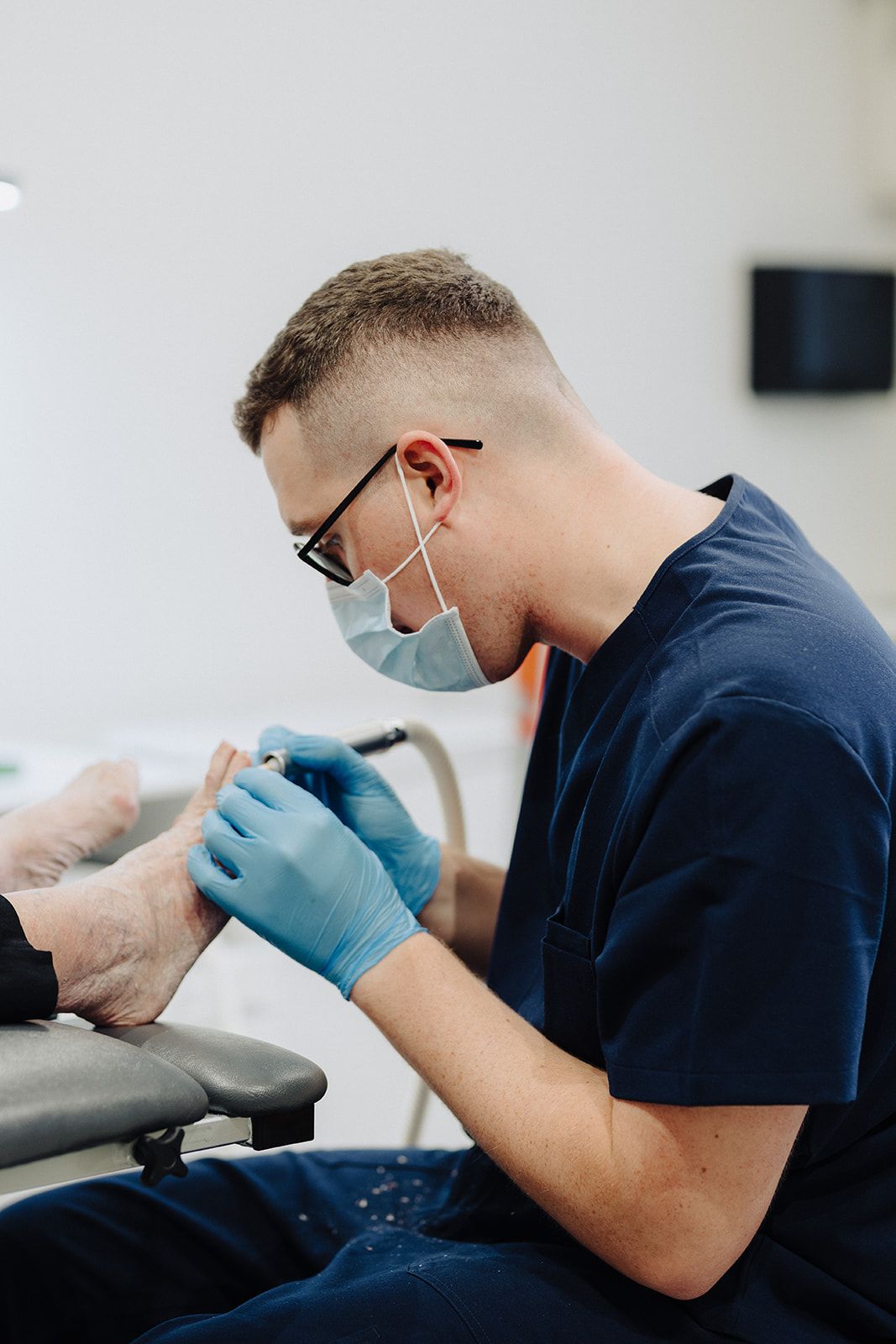
In clinic we use a sterile drill with specialist burrs to reduce the nail properly. It is painless, it takes minutes, and it changes what the topical treatment is being asked to do. Instead of penetrating four millimetres of dense infected nail, it has a thin nail and direct access to the area that matters.
Nails grow slowly, and that is not failure
A toenail takes roughly twelve to eighteen months to grow out completely, and the big toe is usually the slowest. Even when treatment is working perfectly, the infected part of the nail does not become clear. It grows out and is replaced by healthy nail from the base.
This is why so many people conclude that treatment has failed at around the three month mark. At three months there is very little visible change at the tip, because the tip is the oldest part of the nail. What you should be looking for instead is healthy, clear nail appearing at the base and the infected portion moving forwards.
It also explains why regular debridement matters so much for how you feel about it. Reducing the nail improves the appearance immediately, rather than asking you to wait a year to see anything.
Your skin and your shoes are part of the problem
Fungal nail infections and athlete's foot are caused by the same organisms. If you have itchy, peeling skin between your toes and you are only treating the nail, the nail is being reinfected while you treat it.
Shoes matter for the same reason. Fungal spores survive happily in the lining of footwear, so the pair you wear every day can be a reservoir. Alternating shoes so each pair dries out fully, changing socks daily and drying carefully between the toes are not fussy details. They are part of the treatment.
When tablets are the right answer
Oral antifungal medication is more effective than topical treatment for severe or long standing infections, because it reaches the nail through the bloodstream rather than having to penetrate the nail plate. It is not the automatic first choice, because it requires a prescription, a longer course and in some cases blood tests.
We do not prescribe it. What we do is work closely with local GPs, and where we think oral treatment is the better route we will write a referral letter setting out what we have found, what has already been tried and for how long. That gives your GP a much clearer picture than a patient arriving to say a nail looks odd.
What a realistic plan looks like
For most people it is a combination. Reduce the nail properly in clinic, use a topical treatment with evidence behind it and apply it correctly, treat the skin at the same time, sort out the footwear, and come back every six to eight weeks to keep the nail reduced while healthy nail grows through.
That approach will not clear every nail. Nothing does. But it gives you a nail that looks and feels considerably better from the first appointment, a realistic chance of clearance over a year, and an honest view along the way about whether it is worth continuing.
Want yours looked at?
A routine podiatry appointment at Assure Health is £60 for new patients and £53 thereafter, and includes assessment, debridement and honest advice on what treatment can realistically achieve.
Book an AppointmentClinically reviewed by Phil McComiskey, Clinical Director and Podiatrist, HCPC CH34450. Last reviewed September 2026.
Ready to move better?
Book online in under a minute. Same week appointments available.