
Back Pain, and Why Staying Active Beats Resting It
6 minute read · Written by Phil McComiskey, HCPC CH34450
When your back goes, every instinct tells you to lie down and wait it out. It is one of the most understandable responses there is, and it is one of the least helpful. The evidence on this is unusually consistent, and it points the other way.
What the guidelines actually say
A systematic review of eighteen clinical practice guidelines for low back pain found that every single one of them recommended supervised exercise, and that 88 percent gave an overall recommendation for people to stay active. Not one of them recommended resting until the pain had gone.
That level of agreement is rare in musculoskeletal care, where guidance often diverges from one country to the next. When eighteen separate guidelines land in the same place, it is worth paying attention to.
Why rest makes it worse
Pain leads to doing less, doing less leads to deconditioning and weaker muscles, and weaker muscles mean less capacity to handle ordinary daily loads. Less capacity means more pain from the same activity, which leads to doing even less. It is a loop, and once you are in it the loop keeps itself going.
This is why a fortnight on the sofa so often converts a short episode into a long one. Nothing new has been damaged. It is simply that the back is now being asked to do the same job with less to draw on, and getting back to where you started takes considerably longer than it would have taken to keep going in the first place.
Staying active does not mean pushing through
None of this means ignoring pain or training through it. Staying active means keeping moving within your tolerance, and modifying what you do rather than stopping it. Shorter walks more often, changing position regularly, keeping the parts of your routine that feel manageable and scaling back the parts that do not.
Working out where that line sits is exactly what an assessment is for. Most people are capable of considerably more than they fear, and there is usually one or two specific things worth easing off for a while. Being told which is which, by someone who has examined you, is what makes staying active feel possible rather than reckless.
Where hands on treatment fits
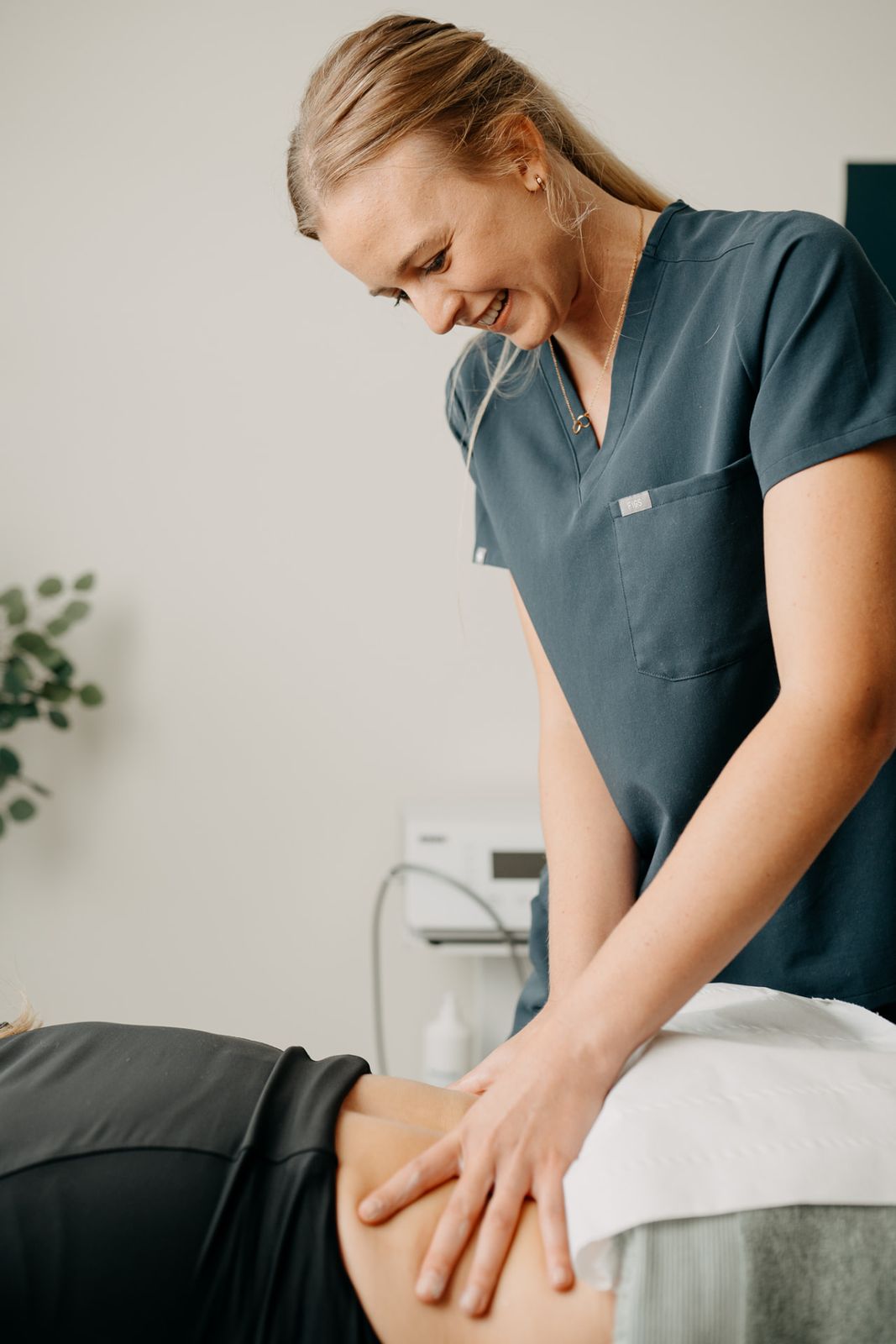
Hands on treatment and massage are genuinely useful. They settle muscle guarding, ease pain and restore movement, and for a lot of people that is where the first real difference is felt. There is no reason to be sniffy about something that helps people feel better and move more.
What it does not do on its own is change your capacity. The relief it gives is a window rather than a fix, which is why we always pair it with a rehab programme and use that window to build strength while it is open.
Older adults are being short changed
Research has found that older adults with low back pain who see a GP are around 50 percent less likely to be advised about exercise than younger patients. Exercise is a first line treatment for low back pain at any age, so this is a genuine gap in the care many older people receive.
Age changes how a programme is progressed. It does not change whether someone should have one. Starting points are gentler and progressions are more gradual, and for this group clinical Pilates is often the best route, because it is supervised, small in numbers and focused on control and confident movement rather than on lifting heavy things.
What to do in a flare up
Keep moving in small amounts rather than in one long effort, change position regularly rather than sitting or standing for long stretches, use heat or pain relief if it helps you stay mobile, and avoid prolonged bed rest even when it is tempting. If it is not settling within a week or two, or it is stopping you working or sleeping, get it assessed rather than waiting it out.
Figures from published research on clinical guidelines for low back pain and on exercise advice in older adults.
Want yours looked at?
A physiotherapy assessment at Assure Health is £75, and includes a full assessment of your back and movement, hands on treatment to settle symptoms, and a progressive rehab programme sent to your phone with video demonstrations of every exercise.
Book an AssessmentClinically reviewed by Phil McComiskey, Clinical Director and Podiatrist, HCPC CH34450. Last reviewed September 2026.
Ready to move better?
Book online in under a minute. Same week appointments available.