
Runner's Knee Explained, and Why Strengthening Your Hip Usually Helps
6 minute read · Written by Phil McComiskey, HCPC CH34450
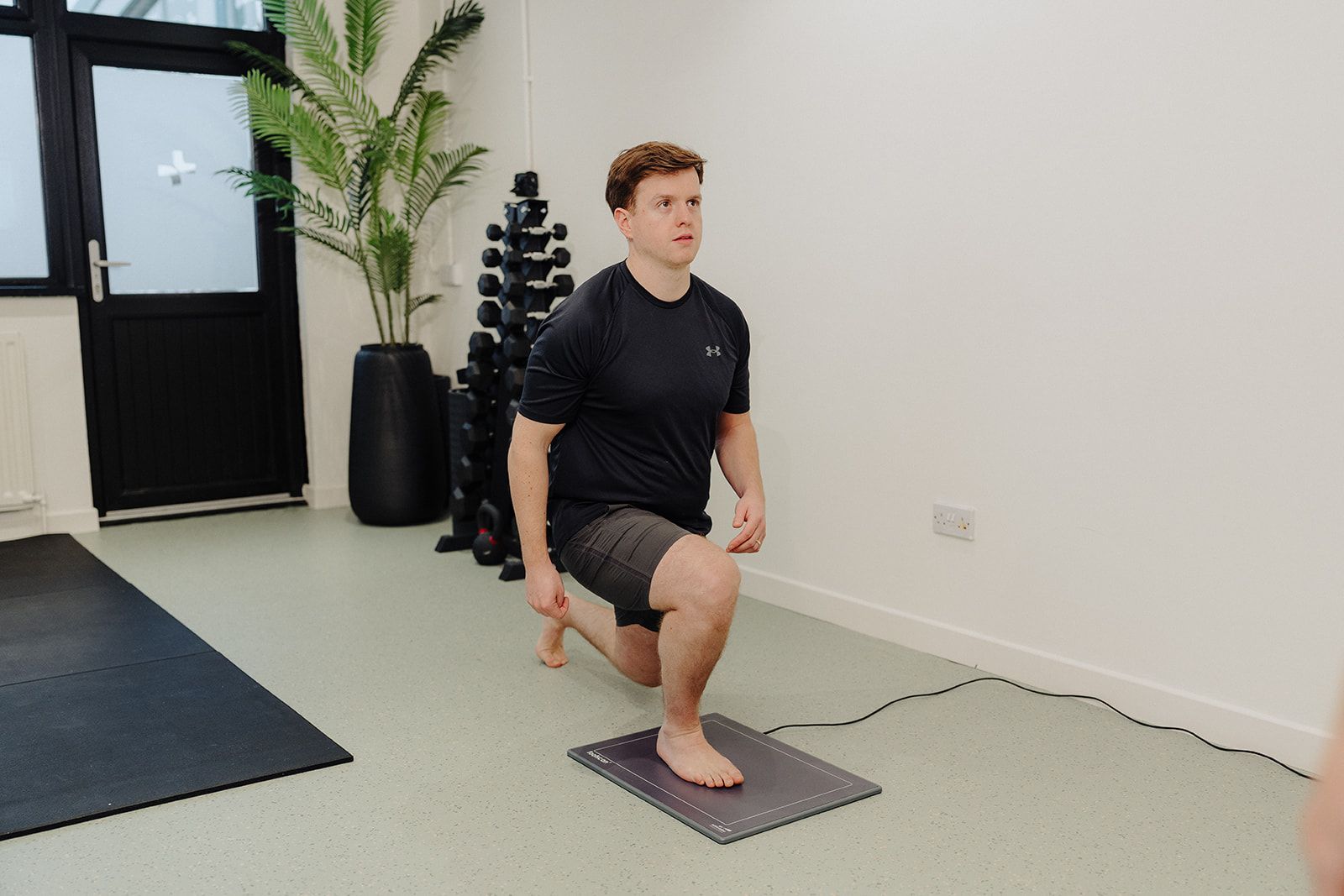
Runner's knee is one of the most common problems we see, and one of the most misunderstood. People arrive worried they have worn their knee out. Most of them have not. They have a knee that is being asked to absorb more than the muscles around it are currently managing.
What patellofemoral pain actually is
Patellofemoral pain is pain around or behind the kneecap. The kneecap sits in a groove at the end of the thigh bone and glides through that groove as the knee bends and straightens, with a large amount of force passing through the joint every time you go up or down a step, squat or run.
The pain comes from how that load is distributed rather than from damage. This is why it is typically worse going downhill or downstairs, worse after long periods of sitting, and worse as running volume climbs. It is also why the knee can be genuinely sore while nothing is worn out or torn.
Why the hip matters so much
The muscles around the hip control the position of the thigh bone underneath the kneecap. The kneecap does not track independently. It follows the groove it sits in, and the groove moves with the thigh bone. So if the hip lets the thigh rotate or drop inwards, the load through the joint shifts, and it shifts onto a smaller area.
Fatigue does the same thing as weakness, which is why symptoms often appear late in a run rather than at the start. It is also why strengthening a muscle group some distance from the painful area works so reliably. You are not treating the knee. You are giving the knee better conditions to work in.
Where the foot fits in
The foot, shin and thigh rotate together, so a foot that rolls in significantly under load takes the shin and thigh with it, and that alters how the kneecap tracks. Where that is a real part of the picture, changing how the foot loads changes what the knee feels.
Being honest about it, though, foot mechanics are one factor among several rather than the automatic answer, and hip strength is more often the bigger lever. That is why we assess it rather than assume it, and why we will tell you plainly if we think your feet are not the main issue.
Why rest is not the treatment
Stopping altogether settles the pain, and it also reduces the capacity of the very muscles that need to be handling the load. So when you go back to running or sport, the knee has less to work with than it had before, and the symptoms return, often sooner than last time.
What good rehab looks like
The mainstay is progressive strengthening of the hip, thigh and calf, loaded properly and increased as you improve rather than repeated at the same level for weeks. Gentle, unchanging exercises are one of the more common reasons rehab stalls.
Alongside that sits load management. We modify what you are doing rather than stopping it, adjusting volume, hills, stairs and intensity so the knee is working within what it can currently handle while the strength work catches up.
The timeframe is weeks to months rather than days, and most people notice a meaningful difference within six to eight weeks of consistent work. The part that matters most is continuing after the pain settles, because that is when capacity is still being built and that is what makes the improvement hold.
When it is something else
A knee that locks, gives way, swells significantly soon after an injury, or cannot take your weight is a different problem, and those need assessed promptly rather than rehabbed.
Want yours looked at?
A physiotherapy assessment at Assure Health is £75, and includes an assessment of the knee, the hip and the foot, strength testing, and a progressive programme sent to your phone with video demonstrations of every exercise.
Book an AssessmentClinically reviewed by Phil McComiskey, Clinical Director and Podiatrist, HCPC CH34450. Last reviewed September 2026.
Ready to move better?
Book online in under a minute. Same week appointments available.